
Customized leadership training leads to customized results.
Cookie-cutter training materials have dominated the way we think about creating more effective leaders. However, the most important factor for effective leadership training is that it is deeply connected to the everyday work of your leaders which an off-the-shelf solution will struggle to do. If you want your training to move the needle, it needs to be woven into the work.
Creating custom training has significant advantages.
How to create custom leadership materials
- Asses Needs: Each organization will have unique challenges and problems. Understanding how your leaders problem-solve, need support, or have asked for development is the first step. Consider the pain-points of employee engagement and leadership, how the choices of leaders impact the bottom line, and the potential future of these individuals.
- Determine Learning Outcomes: Based on your needs assessment, develop a list of things that you would like your leaders to be able to do when the training is complete. This list should be deeper than things you want leaders to learn, and should focus on practical habits and behaviors.
- Identify Constraints and Opportunities: Consider how long your training needs to be, the availability of the attendees, and who will teach it. You will want to decide early on if the training will be virtual or in-person.
- Create Learning Outline: Choose concepts, knowledge, and activities that will match the outcomes and constraints. It is tempting to start with this step but laying the foundation for effective learning requires a throughogh understanding of the situation. Only after you have taken all the right steps should you then start creating learning experiences.
- Prototype and Test: Create learning materials and test them with a small group. Identify what works, what does not and learn how to effectively deploy the learning. For example you might find out that a video that you expected to work with one concept is actually too long for the learning session. Keep careful notes of what needs to be adjusted and fixed. Then make the adjustments for the next deployment.
- Evaluate: Because the training has been centered on specific learning objectives, you can determine if the training has changed the behavior of the participants in the intended ways. Identify metrics and variables that show the needle move then compare those metrics to the pain points you found in the needs assessment. This step isn’t determining if the participants liked the training but if the training changed the way they do their work.
Build Culture
How your leaders lead will be one of the most powerful drivers of organizational values and experience. By fine-tuning the means, mindsets, and skillsets of your leaders, they can represent your values directly. Values then become applicable skills that drive productivity and success.
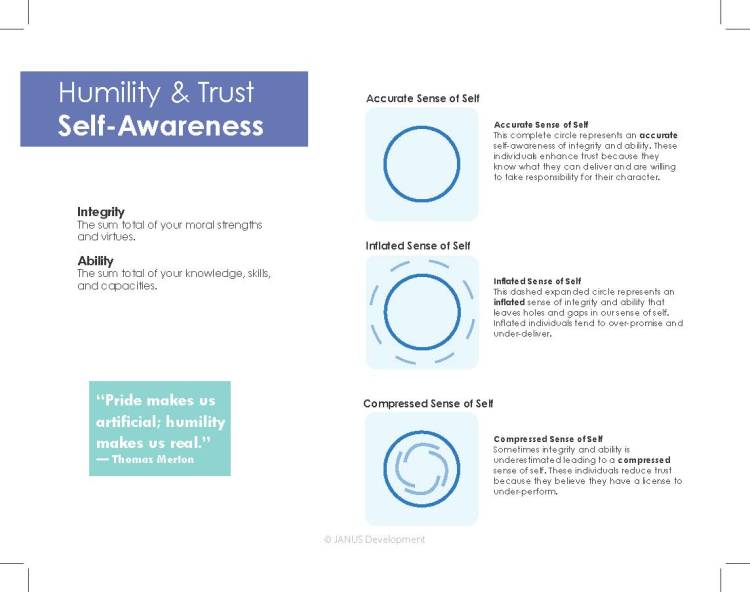
For example, Janus Development required a training seminar to help leaders practice humility. Humility requires specific mindsets and skillsets which were the foundation of the training. Humility went from being a good idea, to a practical way to lead.

Targeted Needs
With custom leadership training, an organization can identify specific areas that need to be improved and equip leaders to handle those challenges. Those needs could be tied to current problems that are impacting revenue such as turnover, or tied to future growth and succession planning. Needs of leaders can vary significantly between industry, experience, and organizational values. Custom leadership training efficiently deploys solutions to meet needs.
For example, the US Special Forces command decided that they needed a training tool to help their combat operators to learn and practice specific ethical decision making skills. The solution was to make a custom handbook with real examples and practical steps soldiers can take on the battlefield when they are faced with an ethical dilemma.
Ownership of Intellectual Property
When you use an off-the shelf training product, you do not own the information and have to adhere to the restrictions imposed by the owner of the intellectual property. This limits your flexibility and freedom to address the issues you want to tackle. It also often requires lengthly, cumbersome, and expensive certification of facilitators. If you create your own training, you can do whatever you need to do with the material to meet your needs.
 Spencer Yamada Consulting